
<ins class='dcmads' style='display:inline-block;width:728px;height:90px'
data-dcm-placement='N46002.3910832MAHOGANYREVUE/B29181624.356591058'
data-dcm-rendering-mode='iframe'
data-dcm-https-only
data-dcm-gdpr-applies='gdpr=${GDPR}'
data-dcm-gdpr-consent='gdpr_consent=${GDPR_CONSENT_755}'
data-dcm-addtl-consent='addtl_consent=${ADDTL_CONSENT}'
data-dcm-ltd='false'
data-dcm-resettable-device-id=''
data-dcm-app-id=''>
<script src='https://www.googletagservices.com/dcm/dcmads.js'></script>
</ins>
What’s the significance of this discovery?
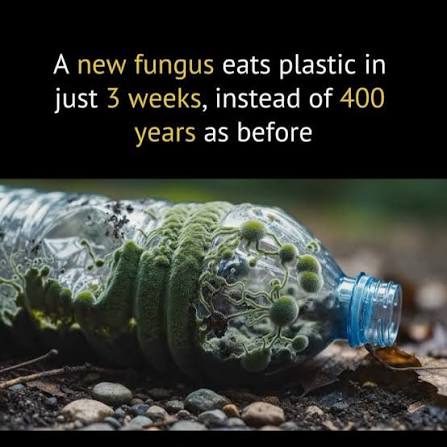
The discovery of the plastic-eating fungus, Pestalotiopsis microspora, is significant because it offers a potential natural solution to the global plastic pollution problem. This fungus can break down polyester polyurethane, a highly durable synthetic material that’s notoriously difficult to degrade. If harnessed and scaled up, this fungus could help reduce plastic waste in landfills and oceans, mitigating the environmental harm caused by plastic pollution.

How does this fungus work?
Pestalotiopsis microspora, the fungus discovered in the Amazon rainforest, works by breaking down polyester polyurethane, a type of plastic, into smaller components. Here’s a simplified explanation:
-
The fungus uses enzymes to degrade the plastic’s polymer chains.
-
It then absorbs the broken-down plastic components as a source of carbon and energy.
-
This process allows the fungus to naturally biodegrade the plastic.
Researchers are still studying the specifics of how this fungus works and how it can be applied to real-world pollution problems. Its potential lies in providing a natural solution for managing plastic waste.
Yale University researchers discovered an extraordinary plastic-eating fungus called Pestalotiopsis microspora deep within the Ecuadorian Amazon rainforest. This unique microorganism can naturally consume and break down polyester polyurethane, a highly durable synthetic material. By utilizing the plastic as its primary carbon source, this biological breakthrough provides a potential natural solution to global pollution challenges.
References:
Yale News: Undergraduate Researchers Discover Plastic Eating Fungus in the Ecuadorian Amazon Rainforest
Scientific Insights: Microorganisms Offer New Bioremediation Pathways for Global Synthetic Waste Management
Nature Discoveries: Tiny Amazonian Organism Breaks Down Durable Plastics in Environmentally Friendly Breakthrough


 English