
<ins class='dcmads' style='display:inline-block;width:728px;height:90px'
data-dcm-placement='N46002.3910832MAHOGANYREVUE/B29181624.356591058'
data-dcm-rendering-mode='iframe'
data-dcm-https-only
data-dcm-gdpr-applies='gdpr=${GDPR}'
data-dcm-gdpr-consent='gdpr_consent=${GDPR_CONSENT_755}'
data-dcm-addtl-consent='addtl_consent=${ADDTL_CONSENT}'
data-dcm-ltd='false'
data-dcm-resettable-device-id=''
data-dcm-app-id=''>
<script src='https://www.googletagservices.com/dcm/dcmads.js'></script>
</ins>
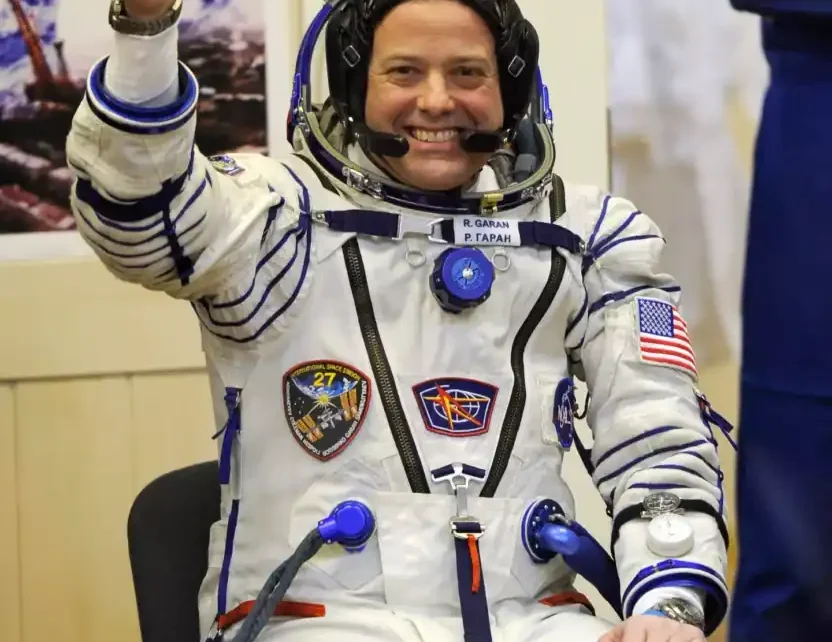
After spending a total of 178 days in space, former NASA astronaut Ron Garan returned to Earth with something far more valuable than mission data.
He came back with a different perspective on humanity and the planet we call home.
From the International Space Station, Earth doesn’t look like a collection of countries, borders or competing interests.
It looks like one magnificent blue planet suspended in the darkness of space.
There are no visible national boundaries. No flags dividing one part of the planet from another. Just one shared home, carrying billions of lives.

Garan spent his time in orbit witnessing extraordinary sights. Lightning storms flashed across continents. Auroras danced above the poles. City lights illuminated the planet’s night side.
But one thing affected him more deeply than anything else.
The atmosphere.
From space, Earth’s protective layer looks incredibly thin. That delicate blue boundary is all that separates the living world from the hostile emptiness beyond it.
It protects the conditions that make life possible.
Garan’s experience brought him closer to what astronauts often describe as the Overview Effect—a profound shift in perspective that can happen when someone sees Earth from space.
Suddenly, the interconnectedness of our planet becomes impossible to ignore.
He began questioning the priorities of modern society.
We often organize our world around economic growth, treating the economy as though it were the foundation of everything. But Garan believes we have the order completely backward.
His message is simple:
Planet first. Society second. Economy last.
The reasoning is straightforward.
The economy depends on society. Society depends on a healthy planet. And the planet’s natural systems provide the foundation for everything we do.
Without clean air, fresh water, healthy soil, stable ecosystems and a functioning climate, neither society nor the economy can thrive.
Garan often describes Earth as a spacecraft carrying billions of passengers.
Every person depends on the same life-support systems, yet we continue behaving as though environmental problems belong to someone else.
But pollution doesn’t stop at national borders.
Climate systems don’t recognize political divisions. Water systems connect communities. The destruction of ecosystems can affect people thousands of miles away.
We are all connected, whether we recognize it or not.
Garan’s message isn’t simply about admiring Earth from a distance. It’s about recognizing our responsibility while we are still here.
Seeing our planet from space didn’t make him feel insignificant. It made him understand how deeply connected we all are—and how much responsibility we share.
We may belong to different countries, cultures and communities, but we are all living aboard the same fragile spacecraft.
There is no backup planet.
No separate atmosphere for each nation.
No second home waiting for us.
Perhaps it’s time we stopped behaving like strangers competing for space on the same ship and started acting like a crew responsible for keeping it alive.
Because in the end, there is no “us versus them.”
There is only us.
And we all depend on the same planet.




 English


