<ins class='dcmads' style='display:inline-block;width:728px;height:90px'
data-dcm-placement='N46002.3910832MAHOGANYREVUE/B29181624.356591058'
data-dcm-rendering-mode='iframe'
data-dcm-https-only
data-dcm-gdpr-applies='gdpr=${GDPR}'
data-dcm-gdpr-consent='gdpr_consent=${GDPR_CONSENT_755}'
data-dcm-addtl-consent='addtl_consent=${ADDTL_CONSENT}'
data-dcm-ltd='false'
data-dcm-resettable-device-id=''
data-dcm-app-id=''>
<script src='https://www.googletagservices.com/dcm/dcmads.js'></script>
</ins>
You may recall a story surfacing from Hurricane Katrina that many refer to as an act of heroism, about a man taking a school bus to rescue people from flooding.
WDSU reporter Shay O’Connor told the story of Jabbar Gibson and where he is today.
Jabar Gibson said, “Hopefully I played a good role and impacted lives. In saving people. I am just glad I did it. I do not regret it.”
Gibson is reflecting on Hurricane Katrina from a federal prison in New Hampshire.
“I was actually in the Fisher Project. They were saying there was a storm coming. But we didn’t know how serious it was going to be,” said Gibson.
He said he was only 20 years old and could barely drive during Hurricane Katrina, when he, his mom and family members rode the storm out from their housing development in Algiers.

Gibson said he witnessed the devastatingly strong winds on the Westbank, but his family of about 11 made it through.
Gibson said, “We rode it out. But we didn’t have anywhere to go. We only had one car, so I couldn’t take everyone with me. Like my family.”
With heat rising and not a lot of food supply, Gibson said he found out about school buses near the levee. The plan was to get his entire family out of the city.
But then he saw others in need, walking along Highway 90 and over the CCC and decided to pick them up too.
“Basically, people walking off the East Bank. People I was picking up from the side of the road. Along the ride, including people in my housing project. In all, it was more than 70 people on the bus. We were packed up on it,” said Gibson.
That was one of the first buses from New Orleans to make it to the Astrodome in Houston, where storm victims from New Orleans were being given assistance.
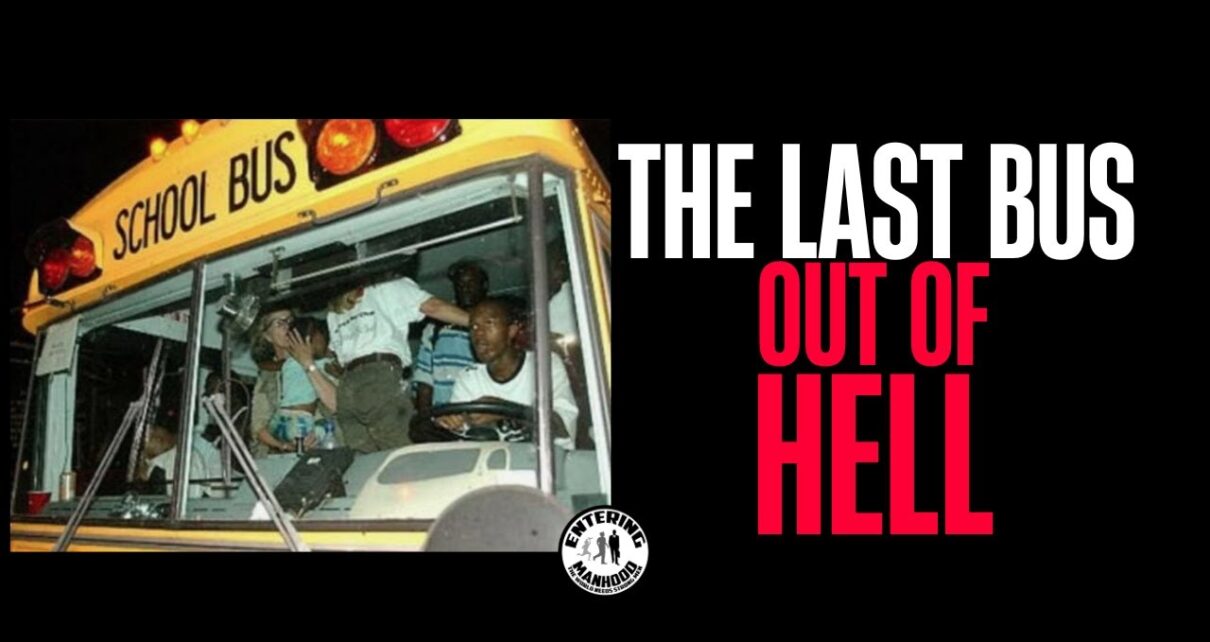
It’s why years later Gibson is still regarded a hero by the many people he helped, and why every year during Katrina’s anniversary you might see the bus photo of Gibson pop up.
Gibson said he was not reprimanded for taking the bus in 2005.
He is currently serving 15 years in federal prison on drug and gun charges, with about 8 years left. He declined to talk about his open case.
But Gibson said every year around this time, he is given hope, remembering the moment he did something that he will always be proud of.
Gibson said, “I just know I am a part of New Orleans history. Forever. I enjoy that. And I appreciate all the people who say good things about me.”
Gibson said he is also working on a film documenting his life’s story and his journey during the storm. All while working on his appeal.
On August 31, 2005, as floodwaters swallowed New Orleans in the aftermath of Hurricane Katrina, thousands of residents remained stranded with no clear way out and no sign of the government evacuation buses they’d been promised. Jabbar Gibson, 20 years old at the time, decided he wasn’t going to wait any longer.
Gibson found an Orleans Parish school bus, reportedly abandoned with the keys still inside, and made a decision that would define the following weeks of his life. He climbed in, started the engine, and began driving through the flooded, debris-covered streets of his city, stopping along the way to pick up anyone he could find still stranded. By the time he was done, he’d loaded close to 70 passengers onto the bus, including infants, elderly residents, and entire families who had nowhere else to turn.
The journey to Houston wasn’t simple. Driving a vehicle that size without a commercial license, through flooded roads, storm wreckage, and police checkpoints, Gibson spent somewhere between seven and thirteen hours behind the wheel, depending on the account. When the bus ran low on fuel, passengers pooled together whatever cash they had between them to keep the tank full and buy diapers for the babies on board.
They arrived at Houston’s Astrodome at around 10:30 that night, becoming the first busload of Katrina evacuees to reach the shelter, arriving before any of the more than 400 official government evacuation buses that had been promised to residents earlier that week. Officials at the Astrodome initially assumed the bus was part of the coordinated relief effort, before realizing a 20-year-old with no formal authorization had beaten the entire system to it on his own.
Gibson’s story spread quickly through national media, with some outlets hailing him as an unlikely hero who acted while official channels failed. Others focused more heavily on the fact that the bus itself had technically been taken without permission, sparking a debate at the time over whether “stole” or “commandeered” more fairly described what he’d done under the circumstances. He was never charged for taking the bus itself.
Gibson’s own life in the years that followed wasn’t free of hardship or controversy. He faced additional legal trouble after Katrina, including dr*g and weap*ns charges, complicating how his story was told and remembered by different people in different ways.
Still, for the roughly 70 people who made it out of a flooded, collapsing city because one young man refused to wait for permission, the outcome was never in question. They made it to safety, hours ahead of the official response, because someone simply decided to drive.





 English