
<ins class='dcmads' style='display:inline-block;width:728px;height:90px'
data-dcm-placement='N46002.3910832MAHOGANYREVUE/B29181624.356591058'
data-dcm-rendering-mode='iframe'
data-dcm-https-only
data-dcm-gdpr-applies='gdpr=${GDPR}'
data-dcm-gdpr-consent='gdpr_consent=${GDPR_CONSENT_755}'
data-dcm-addtl-consent='addtl_consent=${ADDTL_CONSENT}'
data-dcm-ltd='false'
data-dcm-resettable-device-id=''
data-dcm-app-id=''>
<script src='https://www.googletagservices.com/dcm/dcmads.js'></script>
</ins>
LET THE JOURNAL JOURNEY BEGINS
My doctor said if I refused Metoprolol, she’d document it in my chart as non compliance against medical advice. I had fourteen minutes with her. She’d never met me before.
Dr. Whitfield’s retirement letter came on a Tuesday.
Standard form letter. “After 38 years of practice, I’m stepping away effective March 1st. Your care will be transferred to Dr. Reyna Patel.”
I sat at the kitchen table staring at it.
Thirty two years. I’d been seeing Dr. Whitfield for thirty two years.
He knew my history, knew my father’s reaction to blood pressure medication, knew my fear of starting down that road, and he’d always worked with me, always said the same thing, “let’s keep monitoring it, Mark, we’ll try the lifestyle approach first, you’re doing the right things.”
Now he was gone.
My first appointment with Dr. Patel was March 14th. Routine physical. Transfer of records. Meet the new doctor.
I sat in the exam room, same room I’d been in for decades, same posters about heart disease and stroke, different doctor.
Dr. Patel walked in. Young. Maybe 36. Laptop in hand.
“Mr. Bellamy.” Firm handshake. All business. “I’ve been going through your file.”
She sat down, pulled up my records, scrolled, and her expression changed.
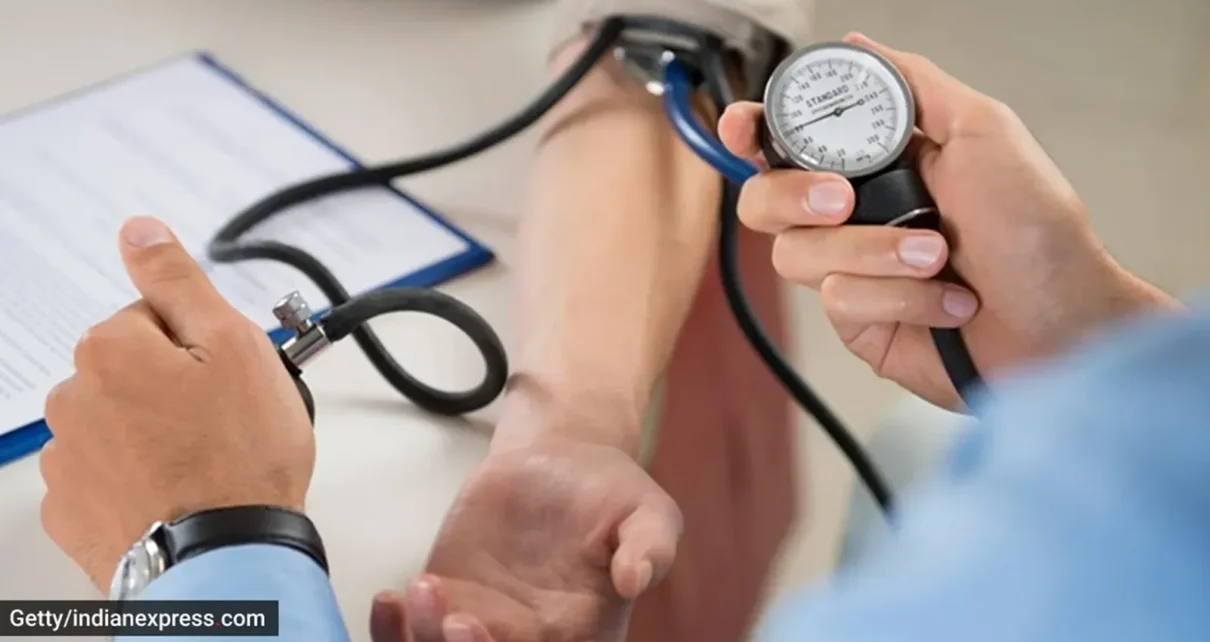
“Your blood pressure history.” She turned the screen toward me. “2022, 138/86. 2023, 144/89. 2024, 151/92. 2025, 158/94. Today, 162/98.”
She looked at me. “Five years of progressively worsening hypertension. Stage two for the last three years. No medication prescribed.”
“Dr. Whitfield and I had a plan, lifestyle changes, diet, exercise, he was monitoring…”
“For five years?” Her voice was sharp. “Mr. Bellamy, your blood pressure has been in the stage two range for three years without treatment, I don’t know what your previous doctor was thinking, but this should have been addressed aggressively years ago.”
My stomach dropped. “Dr. Whitfield knew my history, my father had terrible reactions to…”
“Your father’s history doesn’t change your blood pressure numbers, 162/98, you could have a heart attack, stroke, kidney damage.” She was already typing. “We’re starting Metoprolol. 50 milligrams twice daily.”
“I’d rather…”
“This isn’t a discussion. Your blood pressure is dangerous. If you refuse treatment, I’m required to document it in your chart as non compliance against medical advice.”
The printer hummed. She handed me the prescription.
“Follow up in twelve weeks. We’ll check your pressure and assess your response.”
She stood. Left the room.
The whole appointment took fourteen minutes.
I sat there holding the prescription, hands shaking, the words “against medical advice” and “non compliance” rolling through my head like a verdict.
In the parking lot, I called my wife Diane.
“How was the new doctor?”
“She says Dr. Whitfield should have put me on a blood pressure pill years ago, and she wants me on Metoprolol immediately.”
Silence. “What?”
“She said five years without medication was irresponsible.”
“But Dr. Whitfield always said you were…”
“I know what he said. She doesn’t care. I either take the medication or it goes in my record that I refused.”
That night I couldn’t sleep, just lay in bed staring at the ceiling, Diane’s breathing steady next to me.
Dr. Whitfield had respected my concerns, we’d worked together for over three decades, dietary changes, exercise, less sodium, daily walks, regular checkups every six months.
My blood pressure had climbed, yes, but gradually, no sudden spikes, no symptoms, no emergencies.
Was he wrong to be patient?
Was I walking around with arteries breaking down and didn’t even know it?
At 3 AM I went downstairs, sat at the kitchen table with my laptop, and started searching.
is 162 over 98 dangerous
high blood pressure risks without medication
heart attack risk hypertension men 50s
Every article said the same thing. Increased risk. Arterial damage. Heart attack. Stroke. Death.
Maybe Dr. Patel is right, I thought, maybe I’ve been reckless.
But then I searched, metoprolol side effects long term.
Constant exhaustion. Suppressed sex drive. Depression. Exercise intolerance. Brain fog. Heaviness that never lifts.
And my father’s face flashed in my mind.
He’d been on blood pressure medication for fifteen years, started with Metoprolol, the same medication sitting on my counter right now, and the heaviness came within six weeks, not regular tiredness, a bone deep lethargy that never let up, like someone had filled his arms and legs with sand, dragged through every day, made him seem half asleep when he wasn’t.
They adjusted his dose and the worst of it eased, but then his interest in everything started to drain away.
He stopped wanting to do the things he loved, couldn’t make it up a flight of stairs without stopping, and the fog rolled in.
He started forgetting things, small things at first, where he’d put his keys, what he’d gone to the store for, then bigger things, names of people he’d known for years, the punch line of a story he’d told a hundred times.
And the depression, that was the worst.
This was a man who coached my wrestling team, built our front porch with his own hands, fixed the car in the driveway on weekends.
By 65, he was sitting in his chair most of the day, couldn’t follow a conversation without losing the thread, lost interest in everything he used to love, just existing, going through the motions of a life that didn’t feel like his anymore.
My mother said it was like watching him disappear.
He died at 71. Heart attack. While taking the medication that was supposed to protect his heart.
Fifteen years of side effects. Fifteen years of feeling like a shadow of himself.
And it didn’t save him.
I closed the laptop, rubbed my face, and just sat there in the kitchen with the prescription on the counter mocking me from across the room.
I didn’t fill it.
One week passed. Then two.
Dr. Patel’s office called. “Mr. Bellamy, our records show you haven’t filled your prescription, Dr. Patel wants to confirm you’re taking your medication as directed.”
“I need more time to think about it.”
“Sir, Dr. Patel noted this as urgent, she strongly recommends…”
“I said I need more time.”
I hung up.
Diane found me in the garage that evening. “Mark. Talk to me.”
“I’m looking for options.”
“Options? The doctor said your blood pressure is dangerous.”
“She said Dr. Whitfield was wrong for not putting me on a pill, but Dr. Whitfield knew me for thirty two years, he knew my father’s history, he saw what those medications did to him, he was being careful with me.”
“But what if she’s right? What if you…” Her voice broke. “I can’t lose you.”
“You won’t. I just need to find another way.”
“What other way?”
I didn’t have an answer.
That weekend I searched everything. Beetroot. Garlic. Magnesium. Fish oil. Hibiscus. Every natural blood pressure supplement with actual research behind it.
I tried the top rated beetroot powder on Amazon, six weeks, every morning without fail.
158/95. Basically unchanged.
Switched to high dose garlic extract, allicin standardized, eight weeks, nothing.
Tried a full BP stack from a specialty supplement store, beetroot, magnesium, CoQ10, fish oil, the most expensive thing they had.
156/93.
Two points off the top, maybe three. Noise.
I was running out of time and running out of ideas.
Three weeks before my appointment I was back at my laptop at 2 AM going in circles, reading the same supplement forums, the same Reddit threads, the same dead ends.
Then I changed the search.
I stopped looking for supplements and started looking for the real reason blood pressure goes up in the first place. What’s actually happening inside the blood vessel. Why my number kept climbing year after year no matter what I did.
And I found something that changed the way I understood the whole thing.
It wasn’t hidden. It wasn’t some secret nobody wanted me to know. It was basic science. Just nothing anyone had ever bothered to explain to me in a doctor’s office.
The number on the cuff isn’t the problem. The wall is the problem.
I read that line three times.
Your blood vessels aren’t just tubes. They’re alive. And the inside of every blood vessel in your body has a thin inner wall, a layer of living cells, and that wall is what controls whether your vessels open up or stay tight.
When the wall is healthy, it makes a tiny molecule called nitric oxide. Every second of every day. Nitric oxide is the signal that tells your vessels to relax. When the wall is healthy and the signal is strong, your vessels open and close smoothly with every heartbeat. Blood flows through easy. Pressure stays normal. You don’t think about it. The way you don’t think about breathing.
But that inner wall is exposed to everything in your blood. Every processed meal you’ve eaten. Every blood sugar spike. Every stressful day at work. Every cigarette, every drink, every bad night of sleep. All of it scrapes across that wall, hour after hour, year after year.
And eventually it wears the wall down. Like the inside of an old pipe that’s been rusting for decades. The surface that used to be smooth is now raw and rough.
Once the wall is damaged, it stops making nitric oxide. The signal gets cut off. And without the signal, your vessels can’t relax. They stay tight. Blood has to force its way through. Your heart has to push harder every single beat.
That’s high blood pressure. Not a mystery. A damaged inner wall that stopped sending the signal.
That alone would’ve been enough. But then I read the next part.
The harder blood pushes through a damaged vessel, the more it tears up the wall. Every beat of your heart is pushing blood across a surface that’s already raw. And the force makes it worse. More damage. Less nitric oxide. Tighter vessels. Higher pressure. Even more damage. The cycle feeds itself.
I sat back in my chair.
That was why my pressure kept going up year after year.
That was why the beetroot hadn’t worked.
That was why the garlic hadn’t worked.
That was why the BP stack hadn’t worked.
Every one of those supplements was trying to add more nitric oxide from the outside. Or thin the blood. Or relax the muscle around the vessel. None of them touched the wall. None of them stopped the damage that was driving the whole thing.
I was bailing water out of a boat while ignoring the hole in the side.
That image hit me like a truck. Because it was exactly what I’d been doing. Real work. Real money. Months of taking the pills every morning like I was supposed to. All of it aimed at the number on the cuff while the actual problem ran the show underneath.
And the Metoprolol?
The Metoprolol would slow my heart down with a chemical so it pushed less blood with every beat. The number would drop. Dr. Patel would be happy. But the wall would still be damaged. Still rusting. Still not making nitric oxide. Still getting torn up by every heartbeat. The drug slows the pump. It doesn’t address the wall.
That’s why people on blood pressure meds still have heart attacks. That’s why my father did. His numbers were perfect the morning he died. Perfect. And it didn’t save him because the wall underneath was falling apart the whole time.
We were watching the wrong thing.
So I started looking for something else. Something that actually went after the wall. Not the number. The wall.
What I needed was an antioxidant. Something strong enough to reach the inner wall, neutralize whatever was eating away at it, and let it heal so it could start making nitric oxide again on its own.
Most antioxidants don’t get there. They get broken down in the gut. Or they’re too weak. Or they never reach the wall at all.
I looked at the usual stuff. Green tea. Pomegranate. Grape seed. They all had some research behind them, but the results were small. And the researchers kept pointing out the same thing, you don’t get the same effect from a single piece pulled out of a plant as you do from the whole plant working together the way nature put it.
Then I found something else. Scientists had tested over three thousand foods to see which one had the strongest antioxidants. A fruit called Amla came out on top. Not blueberries. Not turmeric. Not green tea. Amla. And it wasn’t close.
Amla grows in the foothills of the Himalayas. Healers over there have been using it for over five thousand years. They called it the nurse, the one thing they reached for when somebody’s body was breaking down from the inside.
But what really got me was the mechanism paper.
Amla has a specific compound in it called emblicanins. You only find them in this fruit. And what they do is exactly what I’d been searching for.
They find the damage on the inner wall of your blood vessels and they go after it directly. Not in the gut like garlic. Not in the muscle around the vessel like magnesium. Right on the wall itself. Where the problem actually is.
When the damage stops, the wall starts to heal. The raw, beat up surface that hasn’t been able to do its job in years starts to come back. And when the wall heals, it starts making nitric oxide again. On its own. The way it did when you were thirty.
Vessels relax on their own. Blood flows easy. Pressure comes down. Not because something forced it. Because your body is doing what it always knew how to do. You just had to address the wall first.
The hole in the side of the boat. Sealed from the inside.
This wasn’t fringe stuff either. This was real research, sitting in real journals, that nobody at a normal doctor’s office was bothering to look at.
I almost stopped right there and ordered the first Amla bottle I could find. Got one off Amazon that weekend. Cheap powder capsules. Twelve dollars.
Diane saw the bottle on the counter. “Amla? Since when do you take that?”
“Since now. Maybe.”
I took it for a week. Didn’t feel different. Didn’t expect to, you can’t feel your blood pressure. But I went back to the research and noticed something I’d skipped past the first time.
The studies that worked weren’t using grocery store powder. They were using a specific kind. Standardized extract. Organic. Made with low heat. One paper said the cheap stuff most companies sell gets blasted with high heat during processing, and that high heat destroys the emblicanins. The whole reason it works in the first place. So you end up with a bottle of ground up fruit that does nothing.
The Amazon bottle was junk. Whatever was in that fruit was gone before it ever hit the capsule.
That explained the dead week. It didn’t explain what I was going to have to pay for the real thing.
At 4 AM I searched, organic Amla standardized emblicanins.
One brand kept coming up. Not on the wellness blogs. On the forums where people were posting their actual BP logs, week by week, tracking what worked.
Alevia.
Standardized Amla extract. Organic. Third party tested. Made in the USA. Small batches with low heat processing so the emblicanins actually survive.
No fillers. No junk. 90 day money back guarantee.
I ordered it immediately.
The package arrived three days later. Two capsules with water every morning. That’s the whole protocol.
I took the first dose after breakfast, didn’t expect much, I’d been wrong three times already.
I couldn’t check my blood pressure that day in a way that would tell me anything, you need a baseline over time for that, but I noticed something by the end of the first week. The 2 PM crash, the one I’d accepted as normal, didn’t come, I made it to dinner without feeling like I was running on fumes, slept through the night without waking at 3 AM.
Could be placebo. Could be noise. I wasn’t counting it yet.
Week two, I woke up on a Saturday and my hands didn’t feel puffy, the dull pressure I’d felt behind my eyes for months was gone, my thinking felt sharper.
Diane said something first. “You seem less heavy, like something lifted.”
She was right. I didn’t have a word for it until she said it.
Week four, I sat down at the kitchen table with my home cuff, took readings three days in a row, morning and evening, averaged them out.
142/89. Down from 162/98.
I stared at the number, logged it, took the readings again the next morning to make sure.
Twenty points off the top in four weeks. Without medication.
Week seven, I took readings again, same routine, three days, morning and evening.
128/82. Stage one. Out of the stage two range that had put the prescription in my hand in the first place.
I sat at the kitchen table and just breathed for a while.
Two days before my appointment with Dr. Patel, I had my pre visit BP check at the office, standard reading, the results would be in my chart before she walked in.
At the appointment, I sat in the same exam room, same posters about heart disease and stroke, different feeling.
Dr. Patel walked in. Opened my chart. Stopped.
“124/79.”
“Yes.”
She looked at 162/98. Then 124/79.
“You started the Metoprolol?”
“No.”
She looked up. “No?”
“Amla extract. I know how that sounds. But there’s a real reason it works. The inner wall of the blood vessel gets damaged over time and stops making nitric oxide, the molecule that tells your vessels to relax. That’s why pressure goes up. Amla has compounds in it called emblicanins that go after the damage on the wall directly, so the wall heals and starts making nitric oxide again on its own. I can email you everything tonight. I saved all of it.”
Long pause.
“Where did you read this?”
“Pharmacology journals mostly, and research on emblicanins going back decades. I’ll send it tonight.”
She looked at my chart again. Then at me.
“What specifically are you taking?”
“Alevia’s Amla. Standardized extract. Organic. Third party tested. Low heat processed.”
She typed it in, read for a long time, looked at the sourcing and testing documentation.
“Continue what you’re doing. Back in twelve weeks. If it holds below 130, quarterly monitoring. No Metoprolol.”
I walked out of that office and sat in my car for ten minutes.
Called Diane. “124/79.”
She went quiet. Then, “no medication?”
“No medication. Quarterly monitoring if it holds.”
She didn’t say anything for a moment, and when she did her voice was tight. “I knew you’d find something.”
That was four months ago.
Last week I got my quarterly check, 121/77.
Below the thresholds that matter. Stable. No medication. No compliance flag in my chart.
Just results.
If you’re reading this, you’re in the same position I was, cornered, pressured, feeling like Metoprolol or one of its cousins is the only option your doctor will accept.
Here’s what I learned after months of failed supplements and two nights of actual research.
The reason most blood pressure supplements don’t work is that they’re aiming at the wrong thing. They’re trying to add more nitric oxide from the outside. Or thin the blood. Or relax the muscle around the vessel. But they don’t address the inner wall that’s supposed to make nitric oxide on its own. The wall stays damaged. The signal stays cut off. The vessels stay tight. The pressure stays high. Until you address the wall, the cycle doesn’t stop, the number doesn’t come down, and the damage keeps building underneath whether your reading looks good or not.
Metoprolol slows the heart down, but it doesn’t address the wall either, which is why people on blood pressure medication still have heart attacks, and why my father did, and why his perfect numbers on his perfect chart didn’t save him.
Alevia’s Amla was the only one I found that matched the quality the studies actually used, organic, low heat processed, full emblicanins, third party tested, made in the USA in small batches. I don’t know if it’s the only one out there. I know it’s the one that worked for me.
My pressure dropped from 162/98 to 121/77.
My doctor monitors me quarterly. No medication. No lectures. No compliance flag.
Just numbers she can’t argue with.
If you feel cornered, give it 90 days, track your pressure at home with your own cuff, three days a week, morning and evening, then walk into your next appointment with the data.
90 day money back guarantee. If you don’t see improvement in your numbers, if you don’t feel a difference, if you’re not satisfied for any reason, contact customer service for a full refund. No questions asked. You risk nothing.
Alevia is a small company, they make everything in small batches to keep the potency up, which is why it works when most others don’t, and which is also why they sell out regularly and you have to wait for the next batch.
Numbers are the only thing that changes a doctor’s mind.

Mark Bellamy
P.S. I noticed energy and clarity changes by week two, my pressure dropped 20 points off the top by week four, out of stage two entirely by week seven. She backed off the Metoprolol on the spot. Your timeline may vary, but 90 days is the window, and you risk nothing.
P.P.S. The research exists. The reason it works is real. You just have to be willing to look for it. I did the looking. Now you have the answer.




 English