
<ins class='dcmads' style='display:inline-block;width:728px;height:90px'
data-dcm-placement='N46002.3910832MAHOGANYREVUE/B29181624.356591058'
data-dcm-rendering-mode='iframe'
data-dcm-https-only
data-dcm-gdpr-applies='gdpr=${GDPR}'
data-dcm-gdpr-consent='gdpr_consent=${GDPR_CONSENT_755}'
data-dcm-addtl-consent='addtl_consent=${ADDTL_CONSENT}'
data-dcm-ltd='false'
data-dcm-resettable-device-id=''
data-dcm-app-id=''>
<script src='https://www.googletagservices.com/dcm/dcmads.js'></script>
</ins>

WHAT WOULD TRUE RECONCILIATION LOOK LIKE?
Around the world, governments have apologized for historical injustices committed against Indigenous peoples.
But many people ask an important follow-up question:
Is an apology enough?
For some Native communities, the answer is no.
They argue that lands rich in oil, minerals, timber, and other resources generated enormous wealth after being removed from Indigenous control. Because those economic benefits rarely reached Native nations, some believe reparations are necessary to create a more equitable future.
Others believe reconciliation should focus on different solutions, such as returning certain lands, strengthening tribal sovereignty, expanding educational opportunities, protecting treaty rights, and creating long-term economic partnerships.
Both perspectives share a common goal: improving the future for Indigenous communities.
Where they differ is in how that goal should be achieved.
As the conversation continues, more Americans are being asked to think about a part of history that still influences the present day.
 What is your answer?
Should tribes receive reparations for resources taken from Native lands?
YES or NO? Tell us why.

This image reflects a chapter of Native American history that continues to be studied and discussed today.
In the late 19th and early 20th centuries, many Native American children were sent to government-funded boarding schools, including the Carlisle Indian Industrial School. These schools were created with the goal of assimilating Native children into mainstream American society. Students were often required to cut their hair, wear different clothing, speak English, and follow new cultural practices.
For many Indigenous families and communities, these policies resulted in the loss of language, traditions, and cultural identity. The experiences of students varied, but the long-term impact of the boarding school system remains an important part of Native American history.
Today, many tribes are working to preserve and revitalize their languages, traditions, and cultural heritage, ensuring that future generations remain connected to their roots.
Understanding history helps us learn from the past and appreciate the resilience of Indigenous communities who have worked to keep their cultures alive despite many challenges.
What are your thoughts on preserving Indigenous languages, traditions, and cultural identity for future generations?

For generations, Indigenous peoples have been called the original stewards of the land.
Now Canada is paying them to do exactly that.
Through the Indigenous Guardians program, Indigenous communities across the country are being funded to monitor wildlife, protect culturally significant sites, safeguard water sources, and care for traditional territories using knowledge passed down through countless generations.
These Guardians are often described as the “eyes and ears on the land.”
They track animal populations, monitor ecosystem health, document environmental changes, and help protect some of Canada’s most remote and ecologically important regions. Many also work to ensure traditional ecological knowledge is passed to younger generations, strengthening both conservation efforts and cultural continuity.
The program began as a pilot initiative in 2017. After demonstrating strong results, the Canadian government committed approximately $100 million through Budget 2021 to expand Indigenous-led conservation efforts across the country.
For many Indigenous leaders, the program represents more than environmental protection.
It represents a shift in how conservation is viewed.
For much of modern history, Indigenous communities were often excluded from decisions about lands they had cared for long before the creation of national parks and government agencies.
Today, that approach is changing.
Rather than removing Indigenous people from the conversation, the Indigenous Guardians program recognizes that those who know the land best may be among its most effective protectors.
It’s a simple idea.
Protect the people who protect the land.
And in doing so, protect the future for everyone.
What Indigenous-led conservation project has impressed you most?

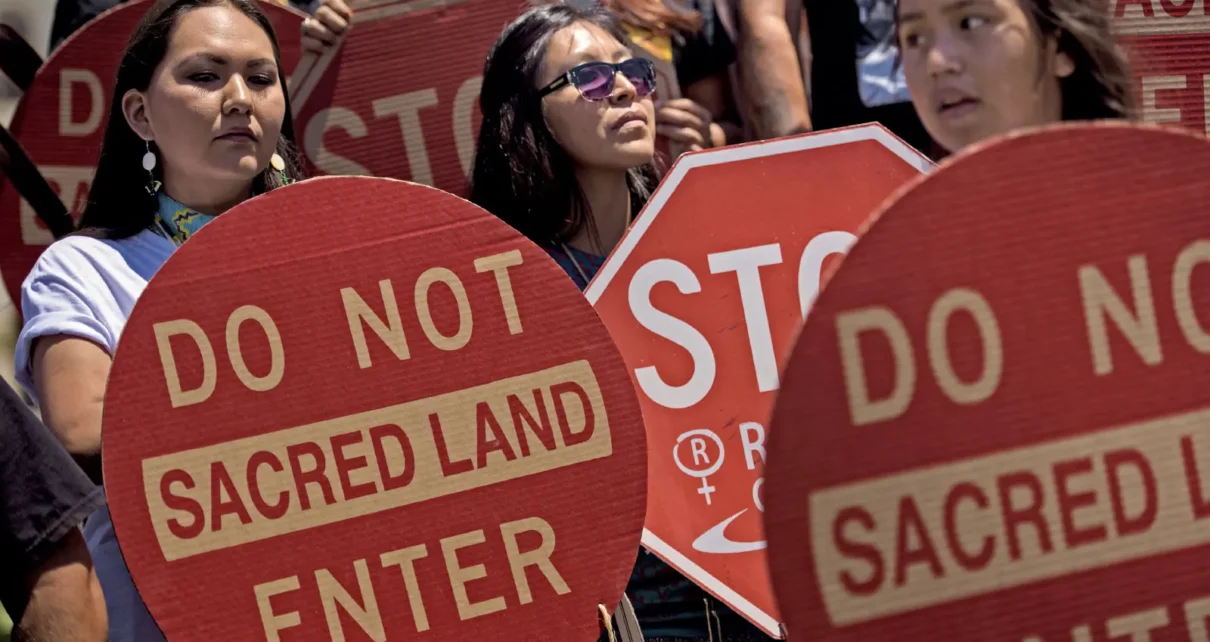
The Black Hills, known as He Sápa to the Lakota, Dakota, and Nakota peoples, are far more than a geographic landmark. They are a place of profound spiritual, cultural, and historical significance that has been central to Indigenous life for countless generations.
In a rare and historic moment of unity, all nine federally recognized tribes in South Dakota have formally supported legislation seeking the return of approximately 1.2 million acres of federally managed public land within the Black Hills National Forest to the Oceti Sakowin (Great Sioux Nation).
Importantly, the proposal concerns federal public lands and does not involve private homes or privately owned property.
For many tribal citizens, the effort is about more than land ownership. It is about protecting sacred sites, preserving clean water sources, safeguarding wildlife habitats, and honoring treaty rights. It is also about ensuring future generations can maintain a connection to places that have shaped their identity, traditions, ceremonies, and history.
The Black Hills remain at the center of one of the most significant unresolved land disputes in American history. In 1980, the U.S. Supreme Court ruled that the Black Hills had been unlawfully taken from the Sioux Nation, awarding financial compensation. Tribal governments have consistently refused the money, maintaining that the land itself, not a monetary settlement, is what matters most.
Today, discussions surrounding the Black Hills often involve multiple perspectives, including tribal sovereignty, conservation, recreation, economic interests, and the preservation of cultural heritage. Yet the unified position of all nine South Dakota tribes highlights the enduring importance of He Sápa and the desire to protect it for generations to come.


Whether viewed through the lens of history, culture, spirituality, or environmental stewardship, the Black Hills continue to hold a unique place in the story of the United States and the Indigenous nations who have called them sacred for centuries.
What role do you think sacred landscapes should play in modern conservation and land management decisions?
#BlackHills #HeSapa #OcetiSakowin #Lakota #Dakota #Nakota #IndigenousVoices #NativeAmericanHistory #LandStewardship #SacredSites #EnvironmentalProtection #TribalSovereignty #NativeHistory #IndigenousPeoples #Conservation

This language was once forced into silence.
Tonight, it was spoken to remind the world:
the Cherokee people are still here.
In a room filled with global attention, a language once targeted for erasure was spoken with pride — not for spectacle, but for remembrance.
These words carried history, survival, and resilience.
For many watching, it wasn’t just a speech.
It was a powerful acknowledgment that culture still lives. 




 English