

Mike Anderson was 22 years old when he made the worst decision of his life.
In August 1999, he and a cousin robbed a Burger King assistant manager at gunpoint—or what looked like gunpoint.
The weapon was a BB gun. The cash stolen was about two thousand dollars. It was impulsive, reckless, and wrong. He was caught, convicted, and sentenced to thirteen years in a Missouri state prison.
Then the state of Missouri simply… forgot about him.
He had been released on bail during his appeals.
When the courts finally rejected his final appeal in 2002, he waited for the call to report to prison. His own attorney told him authorities believed he was already behind bars—there was nothing to do but wait and be ready. So Mike waited. A year passed. Then two. Then five.
The call never came.
Here is what Mike Anderson did not do: he did not run. He did not change his name. He did not move across state lines or hide from anyone. He renewed his driver’s license. He paid his taxes. He registered his businesses openly. He lived his life in plain sight, in the same city, under his own name.
And here is what he did do:
He built three construction businesses from nothing. He fell in love and married. He became a father to four children who had never known a single day without their dad.
He bought a home. He coached his son’s youth football team on weekends. He gave his life to his faith and volunteered at his church in Webster Groves, Missouri. Neighbors knew him as someone who showed up, kept his word, and gave his time to people who needed it.
For thirteen years, while the state of Missouri had an open file with his name on it that no one ever picked up, Mike Anderson quietly became the man that prison was designed to create.
Then, in July 2013 — exactly when his thirteen-year sentence would have ended — a corrections official finally looked at the file.
A SWAT team arrived at his front door at breakfast time. Mike was making food for his three-year-old daughter when men with automatic weapons knocked. He was handcuffed and taken away while his family watched.
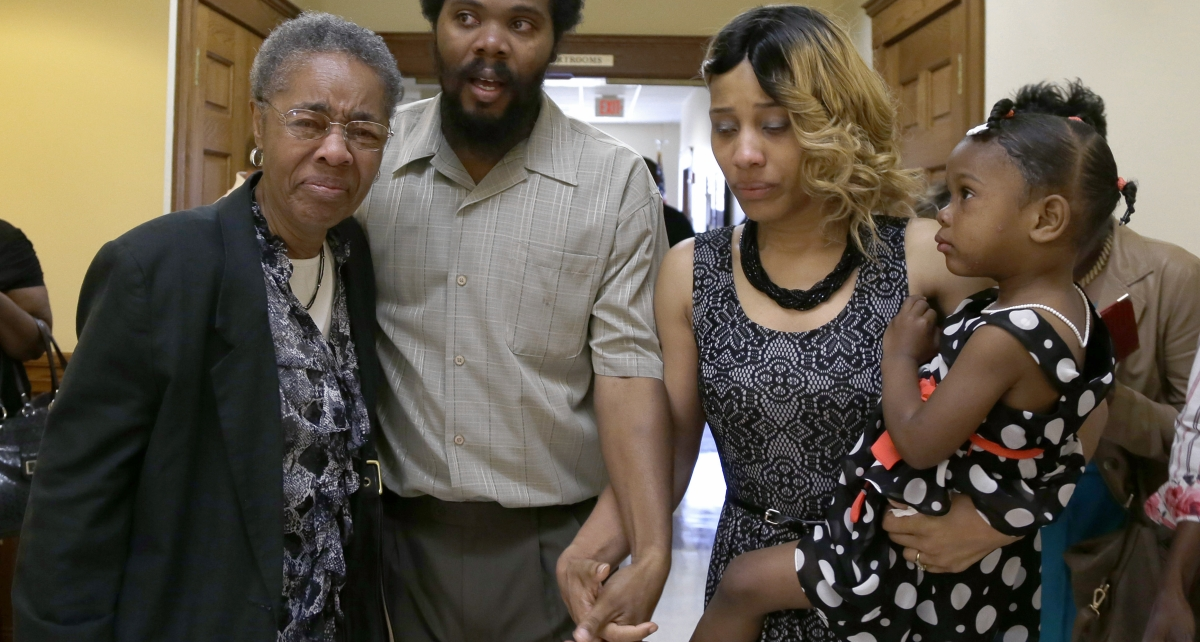
He spent nine months in prison while courts argued over what justice actually meant in a case no one had ever seen before. His wife gave tearful interviews on television.
A petition calling for his release gathered over 35,000 signatures. And remarkably, the man he had robbed back in 1999, the Burger King employee whose life had been shaken by that night, spoke up too.
He said Mike seemed to have gotten his life together. He said the law had dropped the ball. He said the law ought to drop it completely.
On May 5, 2014, Judge Terry Lynn Brown took just ten minutes to reach his decision.
“You’ve been a good father. You’ve been a good husband. You’ve been a good taxpaying citizen of the state of Missouri. That leads me to believe that you are a good man and a changed man.”
The judge credited him for every day of the thirteen years he had spent living responsibly and declared his sentence satisfied.
Mike Anderson walked out of that Missouri courthouse with his wife on one arm, his three-year-old daughter on the other, and his mother by his side.
He told reporters: “I just learned God is good.”
The most remarkable part of this story is not what the justice system did or failed to do.
It is what Mike Anderson chose to do when no one was watching, when there was no reward, no recognition, and no guarantee that it would ever matter.
He chose to become someone worth fighting for.
And when the moment finally came — thirteen years later — the life he had quietly built spoke louder than any lawyer ever could.



 English