

What if your gadgets could get power without being plugged in at all? No charging cables, no sockets, no messy wiring, just electricity moving through the air. It sounds like something from a movie, but scientists in Finland are actually testing early versions of this idea in real laboratories.
Researchers there have shown that small amounts of electricity can be guided through air using a mix of sound waves, laser light, and radio signals. This does not mean power is floating freely across rooms, but it does show that energy can be sent without physical cables when it is carefully controlled.

What did the scientists actually do? Instead of using metal wires, the researchers used ultrasonic sound waves to shape the air itself. These sound waves slightly change air density and create narrow paths where tiny electrical sparks can safely travel. Because these sound-made paths behave like wires, scientists call them “acoustic wires” — invisible wires made from sound instead of metal.
Along with sound, lasers were used to send energy as light to special receivers that can turn light into electricity. At the same time, radio-frequency systems were used to collect very small amounts of power already present in the environment, such as signals from communication networks. Together, these methods showed that electricity can be delivered without direct contact.
Also read: Ever wondered what ‘GPT’ in ChatGPT stands for? Who is behind this research? The experiments were carried out by teams from the University of Helsinki and the University of Oulu, with support from other Finnish universities like Aalto. They also worked with companies exploring power-by-light and radio-energy harvesting technologies. Finland has been steadily building expertise in wireless power, even if it does not make loud headlines about it. A vision Nikola Tesla had over 100 years ago

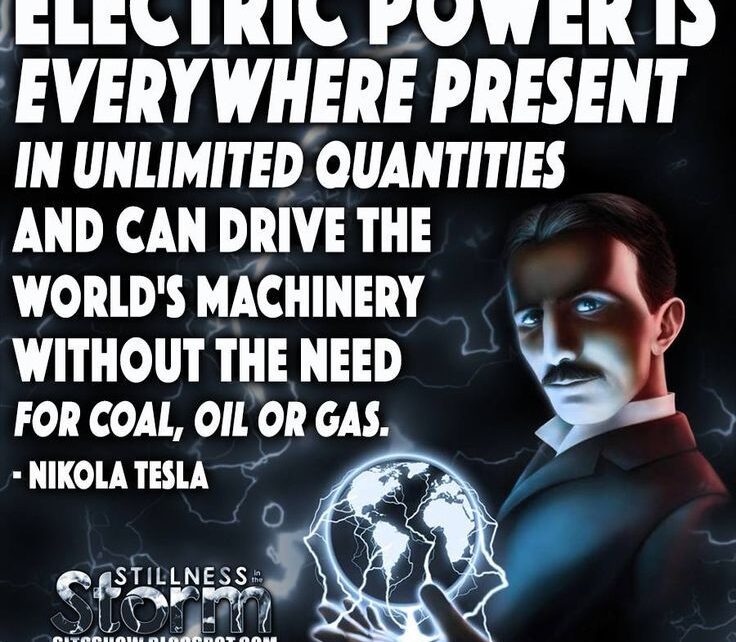
Interestingly, the idea of sending electricity without wires is not new. More than a century ago, inventor Nikola Tesla believed that power could be transmitted through the air and even through the Earth itself.
Tesla imagined a world where people could receive electricity anywhere, without cables or power stations nearby. In the early 1900s, he built the famous Wardenclyffe Tower in the United States, hoping to transmit both electricity and communication wirelessly across long distances. His goal was simple but bold: make power accessible without physical connections.
However, Tesla’s project never became fully operational. The technology of his time could not support safe, efficient long-distance wireless power, and funding for the tower eventually stopped. As a result, his vision remained largely theoretical.
So while Tesla dreamed of global wireless power, Finnish researchers are working on targeted, low-power wireless delivery, meant for sensors, medical devices and smart electronics. The scale is very different, but the core curiosity is, can electricity move without wires? is the same.
Is this really ‘wireless electricity’?

Not in the way people usually imagine. This is not about sending large amounts of power across long distances with no control. What the scientists achieved is better described as field-guided energy, where sound waves, light beams, and electromagnetic fields carefully direct where the energy goes.
In simple terms, electricity is not roaming freely in the air. It is being guided along precise routes created by physics. The real breakthrough is not unlimited power, but accurate control over very small amounts of energy.
Also read: Giving your phone for repair to service centre? Is Finland the first to try this?

Wireless charging is already common in phones and earbuds, but that usually works only when devices are placed directly on charging pads. What makes these Finnish experiments different is the attempt to move power through open air using sound and light together, not just magnetic pads. Similar ideas have been explored in other countries, but Finland is among the leaders in showing how these methods could work in practical setups, even if only at small scale.
Does this change how we think about electricity?
It does not rewrite the rules of physics, but it does challenge the long-held idea that electricity always needs physical wires. It suggests that in certain situations, energy can be delivered without connectors, which could be useful for devices that are hard to reach, sealed, or constantly moving.
This could matter for medical implants that need charging without surgery, factory sensors placed in dangerous areas, or smart devices that must operate without regular maintenance.
Can this replace power lines and plug points?

Not anytime soon. Wireless power still works best over short distances and at low power levels. As distance increases, efficiency drops sharply, and systems need carefully tuned equipment to function safely and reliably. For homes, offices, and cities, traditional power grids remain far more efficient and practical.
Even Finnish scientists say that wireless electricity is more likely to support existing systems rather than replace them, especially in specialised situations where wiring is difficult or unsafe.
Also read: Grok chatbot now explains what you see through camera, follow these steps to enable the feature Glimpse of future devices
Finland is not promising a future where entire homes run on power floating through the air. What it is showing is something quieter but still important: electricity does not always need metal wires, and in some cases, sound waves, light, and radio signals can help guide energy where cables cannot go.
More news…
Giving your phone for repair to service centre?: Your photos, chats, and financial details can be at risk of theft, here’s how to protect your personal data






 English

