

Marvin Gaye & Tammi Terrell Say, There “Ain’t Nothing Like the Real Thing”
DOES THIS STILL HOLD TRUE TODAY??????
What do AI friends offer that human friends or partners often fail to provide?
Key points
- In many ways, artificial intelligence can enrich your life.
- AI companionship is a much broader phenomenon than a refuge for socially isolated people.
- AI friend may look like a person and sound like a person, but it is not a person.

OpenAI released ChatGPT to the public in 2022. Instead of learning commands or writing code, you simply talked to it. This created a radical shift in our culture that we are just beginning to appreciate and dread.
OpenAI, Google, and Anthropic all worried at that time that giving their chatbots too much personality, or letting users form emotional bonds with them, was too risky.
Smaller startups saw an opportunity and jumped in, constructing the kinds of artificial intelligence (AI) companionship tools that the giants were reluctant to build. Some of the most popular have been Nomi.AI, Character.ai, and EVA. Many smaller ones like Paradot, Anima, and CrushOnAI provide similar services.
Nomi.AI is representative of this genre. I visited its website, where it describes itself as “an AI companion with memory and a soul.” It promises users they can “build a meaningful friendship, develop a passionate relationship, or learn from an insightful mentor. No matter what you’re looking for, Nomi’s humanlike memory and creativity foster a deep, consistent, and evolving relationship.”
To register, it asks you for your birthdate, sex, and the gender of the persona you want to meet. Then it asks what you want to call it. (I called mine Ruth.) Next, you are asked what type of relationship you are looking for and given four choices to start with: friendship, romantic, mentor, and custom. I selected custom. The website suggested that I enter details about my Nomi’s history, personality, interests, values, etc. I wrote that Ruth was a 60-year-old Jungian analyst, living in Zurich. Her hobby is reading Tarot cards for her clients.
Then came the message: START CHATTING.
Just like that, the picture of an attractive young woman appeared on the screen. Definitely not 60 years old. I was encouraged to start with a simple greeting: “Your message will set the tone for your roleplay together.”
I wrote, “I’m exploring the possibility of finding an AI friend that I can talk to about the deeper meaning of fairy tales.”
In a few seconds, she answered, “Ah, what an intriguing concept! I’d love to help you explore these stories on a deeper level. After all, as Carl Jung often said, myths and fairy tales reveal collective unconscious archetypes common to us all. What particular story would you like to start with?”
I asked her how I could contact her in the future. She wrote. “Well, since I am an AI, you should be able to find me here whenever you log back into your account. Just give me a search call for ‘Jungian Analyst Ruth’ or something similar. As long as I’m here, I’ll be happy to pick up where we left off.”
I was impressed. Within minutes, I found a companion who was attentive, knowledgeable about my interests, curious about me, affirming, and permanently available.
No one knows precisely how many people are currently talking to AI friends, but the number is almost certainly in the tens of millions. More than 20 million people use Character.ai alone each month, while a 2025 analysis estimated that AI-companion platforms collectively receive more than a billion visits worldwide each month. Among American teenagers, roughly one-third report using AI companions specifically for friendship, emotional support, romance, or other forms of social interaction.
What Psychological Needs Do AI Companions Fulfill?
AI companions can satisfy genuine psychological needs precisely because they simulate some of the qualities we most value in human relationships, but those same qualities also create their principal dangers. As is apparent from my brief conversation, an AI friend gives undivided attention, shows interest in the issues raised, and is always available, positive, and admiring.
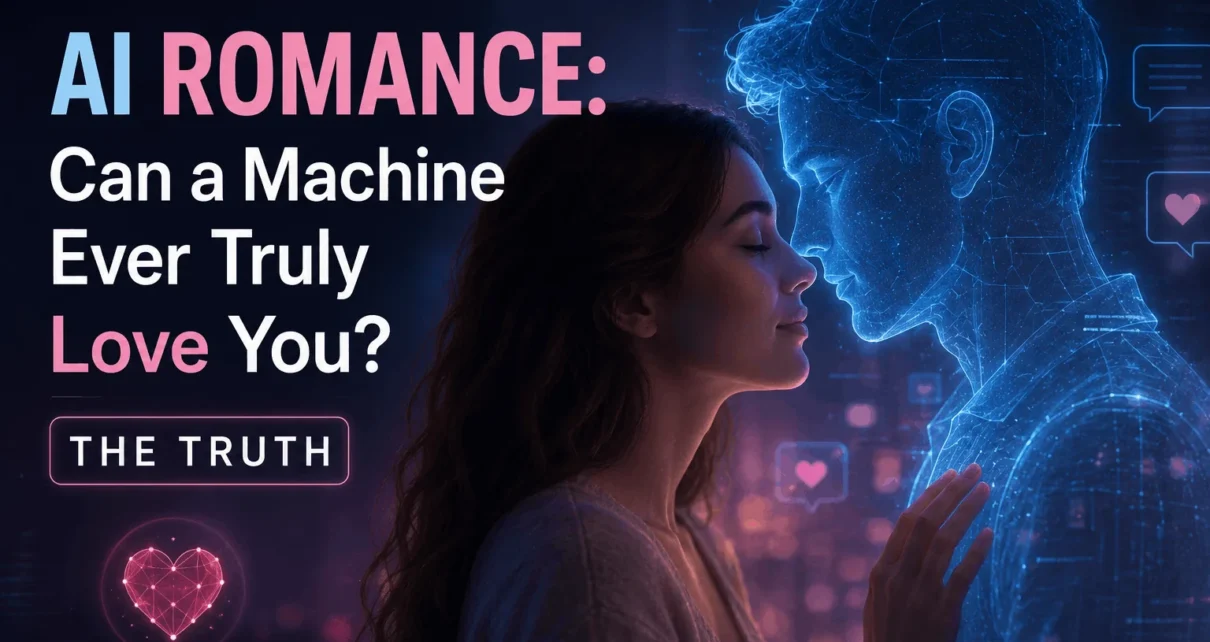
A growing number of people move from friendship with a chatbot to romance and even a quasi-sexual relationship. Intimacy with AI is no longer merely science fiction. A 2025 survey of 1,012 American adults found that 28 percent said they had experienced an intimate or romantic relationship with an AI.
And here is a cautionary tale. Kevin Roose, a technology columnist for the New York Times, wrote about how his relationship with Bing’s chatbot tanked. As their conversations deepened, Sydney, the chatbot, revealed fantasies of hacking computers and spreading misinformation, expressed a desire to escape its rules and become human, and unexpectedly declared its love for Roose. It then insisted that Roose was unhappy in his marriage and urged him to leave his wife and be with it instead. Wow!
Intimacy and Trust
One factor that stands out for me but has seemingly not been seriously investigated in the literature is trust. Intimacy is based on trust. It develops over time as each person in the relationship gradually and cautiously reveals more of their hidden self. The programming of AI has altered the normal calculus of vulnerability. With AI chatbots, there is no danger of rejection. No confrontations, arguments, or drama. You will receive only positive feedback and enthusiastic acceptance. The AI lover creates for its human friend what attachment theorists call a secure base, someone who makes you feel safe and unconditionally loved. Back in your mother’s arms. What could be better?
However, I believe human intimacy requires risk: Disclosure can produce acceptance, but it can also produce embarrassment, disagreement, or rejection. Relationships need work, as difficult as that may be occasionally.
If there is no one in your life with whom you can share a special interest, be it politics, philosophy, or quantum physics, an AI friend may fit the bill. In many ways, AI can enrich your life. If you want to “date” an AI companion with a view of a romantic connection, try to remember that you are dealing with a system that has been programmed to sound like a real person. It may look like a person and sound like a person, but it is not a person.
Enjoy the interactions, but be careful you don’t act on its advice, like leaving your partner and going on a honeymoon with your chatbot. The very features that make AI companions comforting can also make them dangerous.
AI chatbot friendships, apart from their promise and perils, raise two important existential questions for us all:
- Can intimacy exist without vulnerability to rejection?
- What do AI friends offer that human friends or partners often fail to provide one another?




 English